At Herts Young Homeless, we work with young people who are navigating some of the most difficult moments of their lives. These include family breakdown, mental health challenges, and homelessness.
So why are we talking about toxic masculinity?
Because we’re seeing, more and more, how harmful gender norms and online influences are shaping the attitudes and behaviours of young people, and how this can contribute to family conflict, mental health issues, and ultimately, youth homelessness.
Understanding Toxic Masculinity
Toxic masculinity isn’t about blaming boys or men. It’s about recognising a narrow and harmful set of beliefs around what it means to “be a man”. These beliefs discourage vulnerability, promote dominance, and ridicule anything perceived as weak or feminine.
These ideas are amplified online, particularly through the “manosphere”, a network of forums and influencers that promote misogyny and emotional suppression. According to a 2024 survey by King’s College London, one in five young people familiar with Tate’s views didn’t find them offensive. Young men were nearly twice as likely to hold this view compared to young women.1
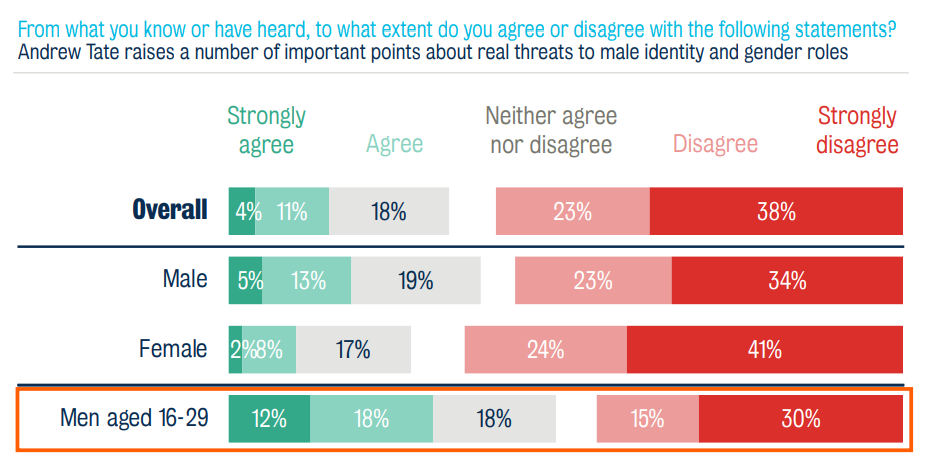
Source: https://www.kcl.ac.uk/policy-institute/assets/emerging-tensions.pdf
It’s Just a Joke… Until It Isn’t
In our education workshops, we often hear it’s just a joke when harmful language or attitudes are challenged. But what may start as banter can quickly turn into more harmful behaviours. For example, we’re increasingly hearing from schools about unconsented photo sharing on Snapchat and group chats and growing negative attitudes amongst their male students. These behaviours can cross boundaries and affect relationships, trust, and safety.
Alongside this, our wellbeing and mediation teams have seen increasing worry around ‘toxic’ ideas. They have seen fathers that have been engaging with misogynic online content, and young women that have disclosed being in unhealthy / abusive relationships with male partners.
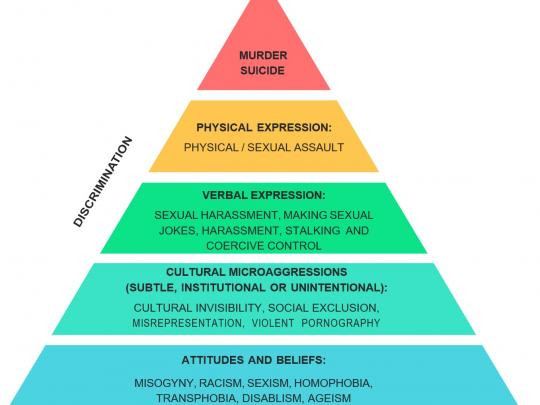
One of our mediators, Izzy, recently attended training to understand and challenge these patterns. A helpful visual used in that training was the Pyramid of Sexual Violence, which illustrates how everyday attitudes and ‘jokes’ can be the foundation for more harmful actions.
But how does this relate to homelessness?
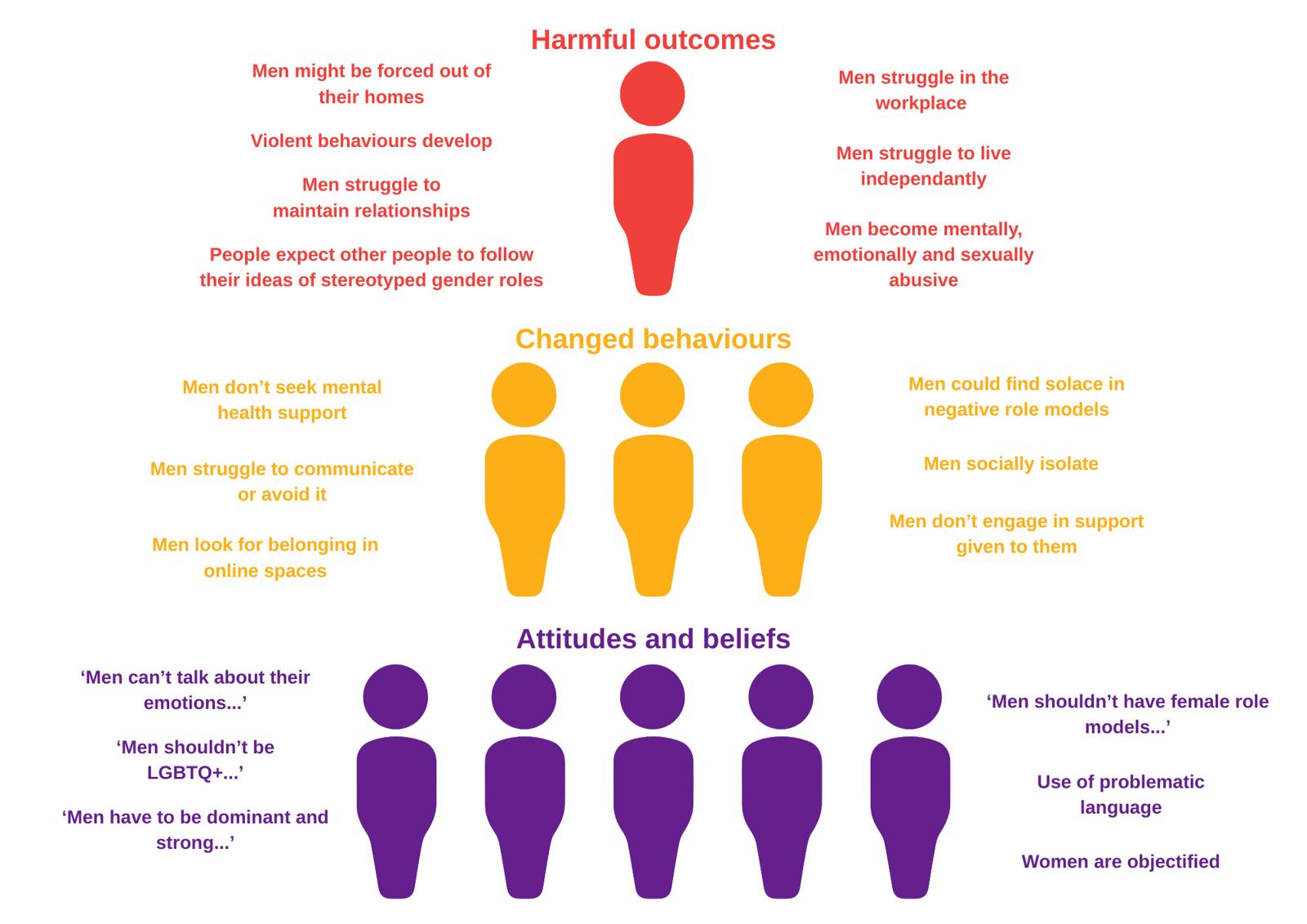
For many of the young men we support, toxic masculinity has contributed to a reluctance to seek help. Mental health issues go unspoken. Emotions are bottled up. Relationships at home can become strained, and sometimes even violent.
Despite having high rates of anxiety, depression, and trauma, men are finding it difficult to be open about their struggles and feelings. The Mental Health Foundation report that only 36% of NHS talking therapy referrals are men, highlighting the problem that men are less likely to access psychological therapies than women.2 Many of the young people that we work with have a history of mental health needs, which could impact on their employability, relationships and ability to maintain a stable home.
For a small amount of people who fall into these beliefs, their behaviours towards others can be impacted. Domestic violence remains one of the most common reasons young people become homeless. These ideas can perpetuate the need for dominance and power, which can turn into violet behaviours, where young people do not feel safe within their homes, or they may be a danger to others. Last year, we saw this prevail close to home, with the murders of Louise, Hannah and Carol Hunt. The prosecution alleged that their perpetrator watched and engaged with violent, misogynistic online content in the days before.3
We are also aware that some of the homeless young people may be vulnerable to toxic online spaces, due to possible strained relationships, social isolation, or may have a lack strong role models4,5. These online communities, sometimes dubbed ‘the manosphere’, can offer a sense of belonging, along with easy ‘black and white’ thinking, but often reinforce damaging messages around masculinity, gender, and power.
That’s why we’re investing in learning more and providing resources and support for our staff and young people. By understanding the landscape our young people are living in, we can support them more effectively.
How Do We Move Forward?
At hyh, we’re also working closely with local schools, and continue to deliver our Healthy Relationships sessions. These tackle issues around respect, communication, and safe boundaries, aiming to help young people navigating their home life in a healthy way.
We’re always looking to diversify our team, and we understand the need for more male teachers and male staff within charities. By having a relatable, warm and open male to talk to, we can begin to tackle the gendered stereotypes of a ‘real man’.
Izzy, from our mediation team, has attended training around the issue of toxic masculinity and how this is impacting young people from today. From this, and her extra research and future presentation to her team, we’ll have a better understanding of how we can be more vigilant and support our young people.
Below are a list of resources that could help young people and their parents:
- Gender-based violence toolkit
- Talking to men about mental health & suicide
- Mental health, relationships, identity and conversations
- Online safeguarding and understanding
And to finish, our Early Intervention Manager, Laura, shared with the team a poem by Hollie McNish, reminding us that not all young men fall into this culture…
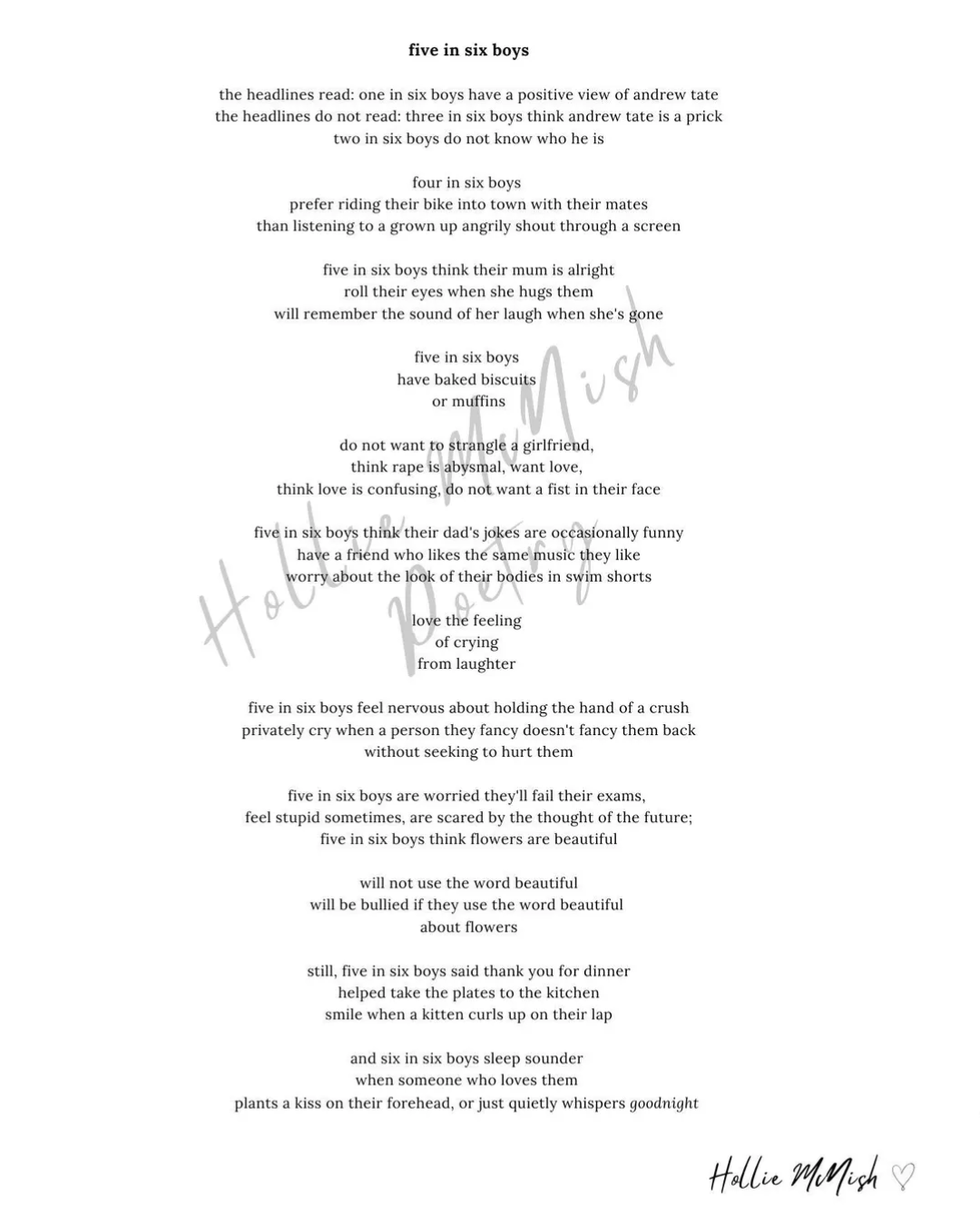
Source: https://www.etsy.com/uk/shop/PoemsbyHollieMcNish
Instagram: @holliepoetry
References:
- https://www.kcl.ac.uk/policy-institute/assets/emerging-tensions.pdf
- https://www.mentalhealth.org.uk/explore-mental-health/a-z-topics/men-and-mental-health
- https://news.sky.com/story/kyle-clifford-violent-misogyny-of-kind-promoted-by-andrew-tate-fuelled-rape-and-triple-murder-prosecutors-allege-13321891
- https://www.ofcom.org.uk/online-safety/protecting-children/the-manosphere-unmasked
- https://www.theguardian.com/media/2024/mar/02/positive-male-role-models-detoxifying-social-media-manosphere