The Hidden Crisis: LGBTQ+ Youth Homelessness and Intersectionality
At Herts Young Homeless, we firmly believe that everyone deserves a safe, stable, and permanent home. Every day, our dedicated frontline workers witness how young people’s experiences with homelessness differ—and how factors like race, disability, and sexuality can create additional barriers. Many of the young people we meet have faced rejection, discrimination, and systemic challenges that ultimately lead to homelessness.
That’s why we recognize the importance of analysing homelessness through an intersectional lens. It’s essential to understand who is most at risk, why they are vulnerable, and how we can offer better support. A new report commissioned by AKT, in collaboration with the Universities of Kent, Bristol, and Southampton, shines a light on one often-overlooked population: LGBTQ+ youth.
The Role of Intersectionality in Youth Homelessness
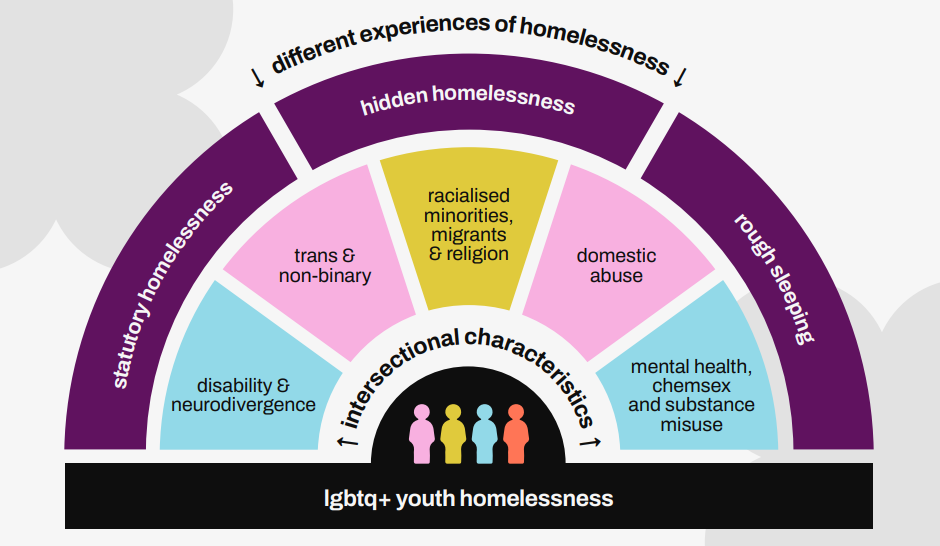
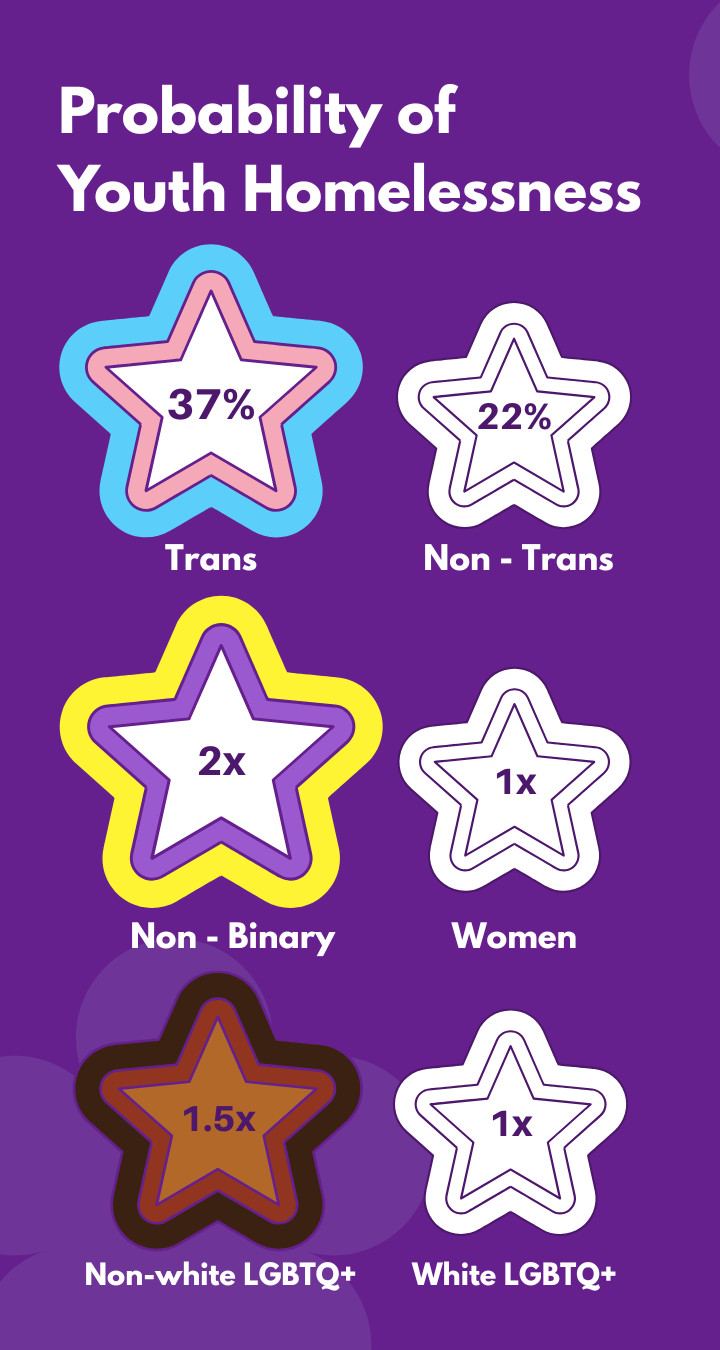
When a young person becomes homeless, their experience is often shaped by multiple aspects of their identity. Research, like the AKT report, is crucial in helping us tailor services to meet diverse needs. The findings are sobering: LGBTQ+ young people—particularly transgender and non-white youth—are disproportionately affected by homelessness.
Statutory governmental data, however, tends to underestimate the prevalence of homelessness among LGBTQ+ youth, especially hidden homelessness. This is when someone is without a stable home but stays with friends, sofa -surfs, or temporarily lives in unsafe or insecure spaces without accessing formal support.
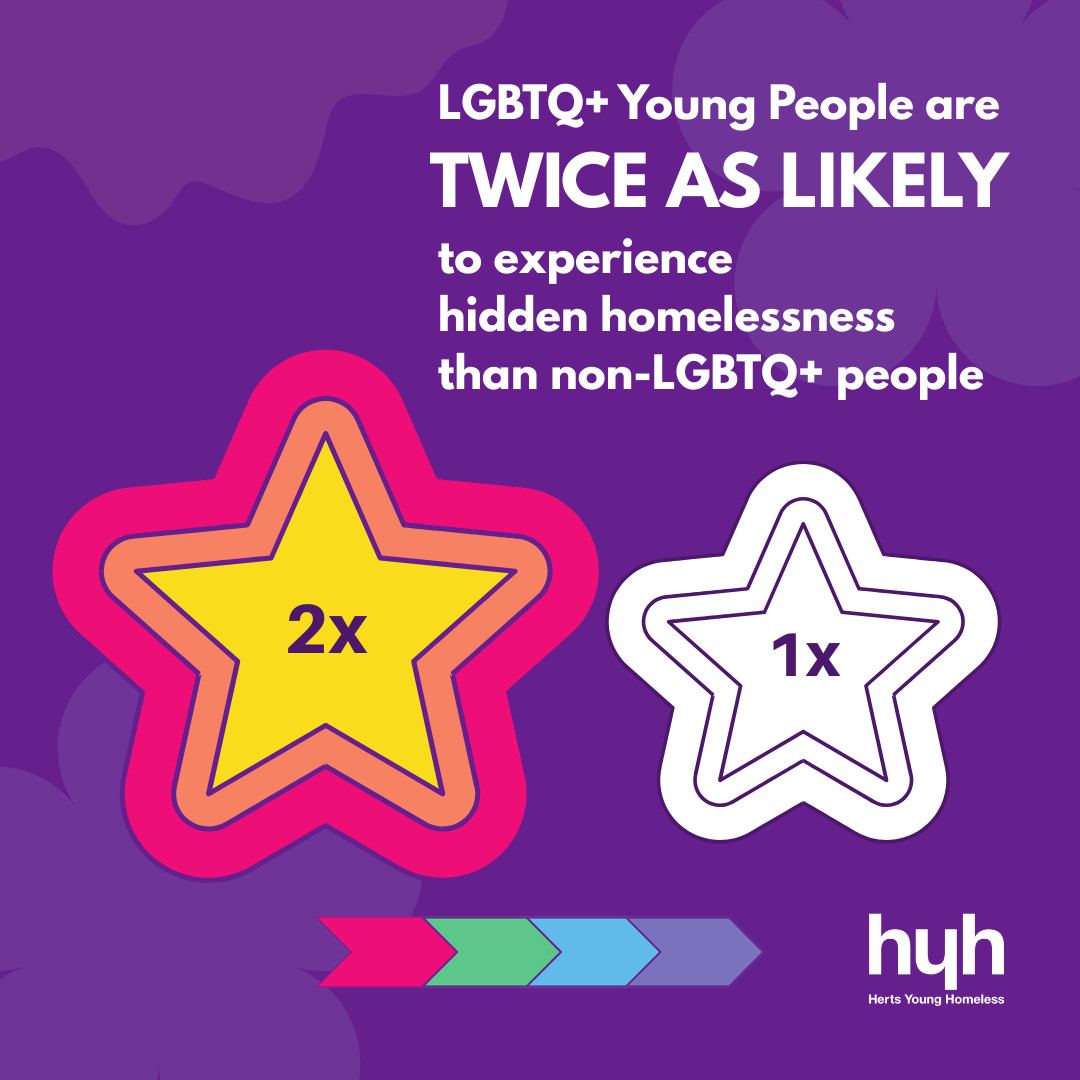
Looking at data from the Office of National statistics, young LGBTQ+ people across age groups were more than twice as likely to experience hidden homelessness as non-LGBTQ+ people. It was also evident that the risks of homelessness change depending on the intersectionality’s within the LGBTQ+ community, and when they are part of other minority groups.
Most of the 26% of respondents for the AKT report, who reported having experienced homelessness, had experienced hidden homelessness.
Key Findings from the AKT Report
When LGBTQ+ youth homelessness is examined in detail, some striking trends emerge:
- Being LGBTQ+ and from a racialized minority increases the risk of hidden homelessness by 50%.
- Male LGBTQ+ youth are particularly vulnerable, with 75% of respondents reporting experiences of hidden homelessness.
- Mental health struggles significantly increase the likelihood of homelessness.
- Alcohol use was not found to be a contributing factor in hidden homelessness among LGBTQ+ youth.
- Improving mental health alone won’t reduce the risk of homelessness, showing that there is a far more complex set of drivers of homelessness for this population.
This research underscores just how varied and disproportionate the risk of homelessness can be within the LGBTQ+ community, and how it differs from the general population’s experiences.
Real-Life Impact: Lisa’s Story

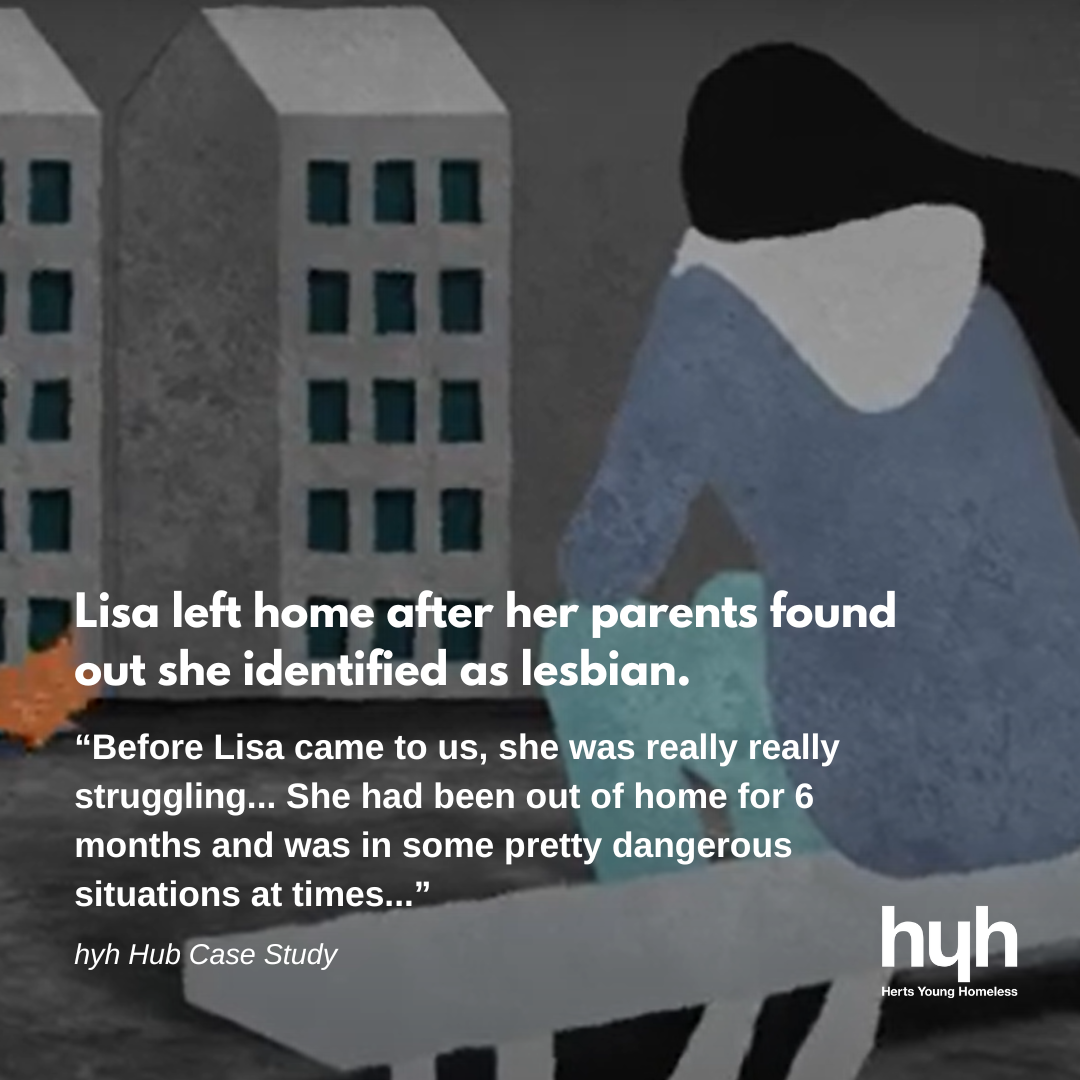
At Herts Young Homeless, we see these statistics reflected in real lives. Take Lisa, for example. After her family found out about that she was a lesbian, Lisa faced rejection from her family. She ended up bouncing between friends’ houses and, at times, found herself in unsafe situations. Unfortunately, Lisa’s story isn’t unique. Many LGBTQ+ youth experience similar rejection and instability.
Through our mediation services, Lisa was able to rebuild her relationship with her family. You can read Lisa’s full story and learn how we helped her find a path back to safety: Lisa’s Story – Case Study.
The Hidden Problem
LGBTQ+ youth homelessness is often described as a “hidden” or “invisible” crisis. Family rejection, a lack of tailored support services, and hidden homelessness all contribute to this issue. Unfortunately, the available data doesn’t adequately capture the full scale of the problem, especially when it comes to the intersecting challenges faced by LGBTQ+ youth from other minority groups.
We fully support AKT’s call for stronger prevention and better support for LGBTQ+ youth at risk of homelessness. Intersectionality and youth-specific needs must be central to the Homelessness Code of Guidance if we’re going to address this crisis effectively.
No young person should be without a safe place to call home. By listening to their stories, using intersectional data, and improving services, we can work toward a future where no one is left behind.