How poverty and hunger affects everyone’s purse strings
At Herts Young Homeless, we see every day how homelessness doesn't just affect individuals—it impacts entire communities and stretches public services. A recent report from The Trussell Trust, The Cost of Hunger and Hardship, helps shine a light on just how wide and deep that impact really is. Working with Humankind Research, the report explores the scale of extreme hardship in the UK, and the extent of those who may need support in the future.
A Growing Crisis
A record 9.3 million people faced hunger and hardship in 2022/23, which includes 6.3 million adults and 3 million children. This is defined as those who are regularly unable to afford essential items. Some groups are disproportionately hit harder than others. Families with three or more children, single parents, renters, disabled people and racialised communities are more likely to struggle. For many, one unexpected cost or setback is all it takes to fall into crisis.
Worryingly, recent reports are highlighting the growth of the cost of living. The Food and Drink Federation has forecast that food and drink prices are set to rise by an average of 4.3% in 2025, with higher national insurance contributions being partially passed on to consumers. At the same time, the Office for National Statistics reported that unemployment is rising and wage growth is slowing, as employers face new taxes and legal obligations.
The Price We All Pay
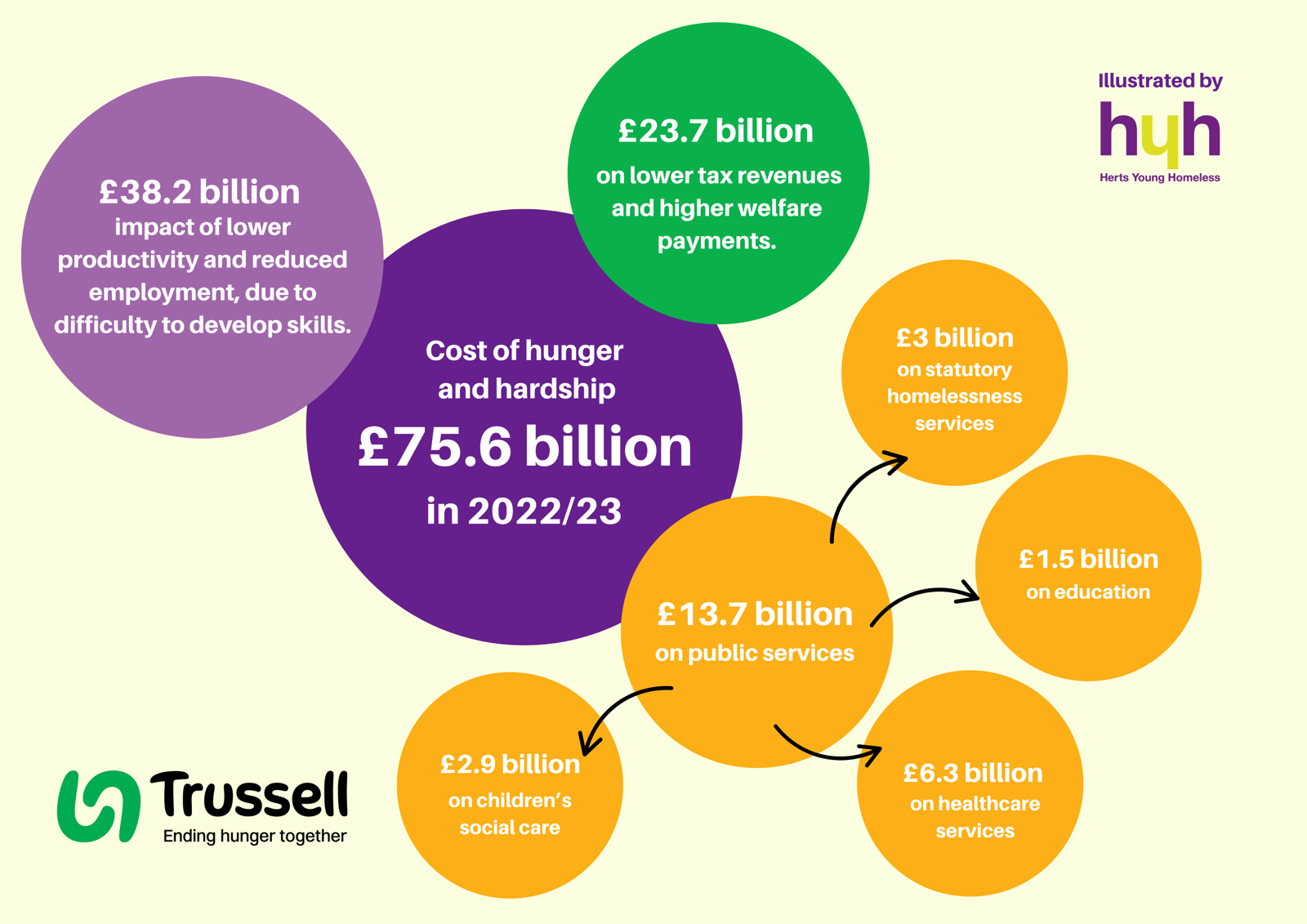
Aside from the moral importance to address this issue, there are real benefits for society, the economy and the public purse. The cost of hunger and hardship in the UK was at least £75.6 billion in 2022/23:
£38.2 billion was the impact of lower productivity and reduced employment, due to difficulty to develop skills, and finding and sustaining work.
£23.7 billion on lower tax revenues and higher welfare payments.
£13.7 billion on public services, including:
£6.3 billion on healthcare services for those facing hunger and hardship.
£1.5 billion on education
£2.9 billion on children’s social care
£3 billion on statutory homelessness services
If nothing changes, the Trussell Trust predicts that an additional 425,000 people are expected to face hunger and hardship by 2026/27, increasing the annual cost up to £79.1 billion.
Looking Forward
It is clear to see that restructure is needed, to direct funds to help those facing hunger and hardship directly. If people have the money they need to live, that will be spent into our economy. The Trussell Trust has proposed the following two solutions:
‘Essentials Guarantee’: Ensuring that no one in the country goes without the essentials they need to survive. This could drive £17.6 billion in economic benefits.
Scrapping the two child benefit cap: This would lift 470,000 children out of poverty by 2026/27, boosting the economy by £3.1 billion.
What We’re Doing at Herts Young Homeless
This report gives an overview of the problem nationally, but it affects everyone individually. Click on the below images to listen to some of the experiences of our service users:

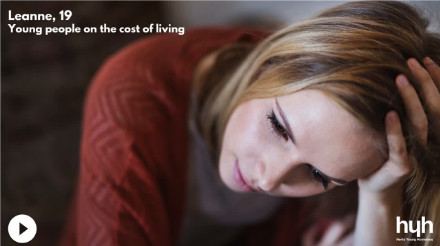

At Herts Young Homeless, we’re proud to be part of the solution, helping young people find stability, dignity, and a path forward. Here’s how we help save the public purse while supporting young lives:
Prevention – We work to stop homelessness before it starts, through early intervention, mediation, and advice. This helps reduce the use of costly emergency housing and social care services.
Education – Our workshops in schools teach young people about housing, money, and relationships. These vital life skills build resilience and reduce long-term dependence on state support.
Promoting long-term independence – We support young people to live independently, break cycles of crisis, and move into employment or training.
We are also campaigning for the government to include a ‘Youth Homelessness Chapter’ in their strategy to tackle homelessness, focusing directly on how we can help young people. You can find more information and get involved here.